
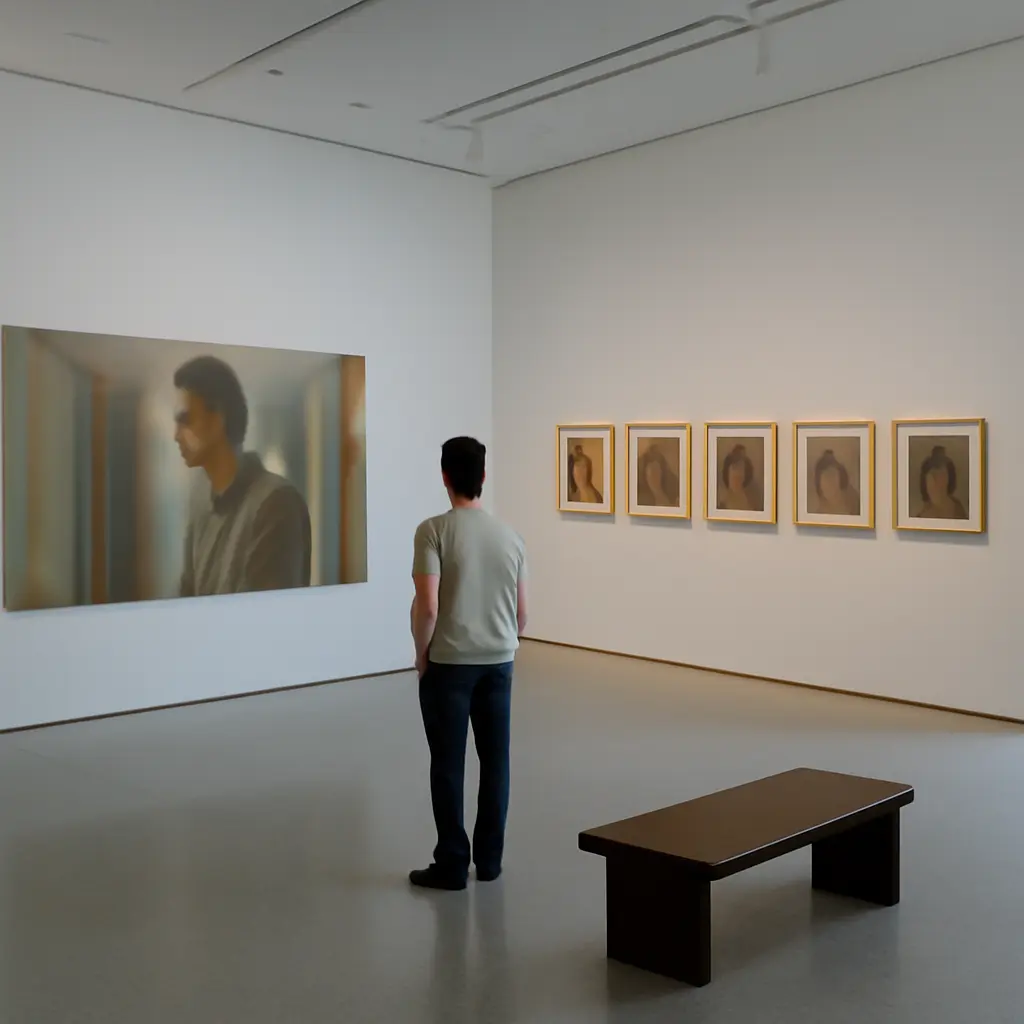
A favorite film becomes an artistic statement when an artist reworks its images, characters, or scenes to express a new idea—not merely to celebrate the original. This practice, often called appropriation or transformative adaptation, can turn familiar movie material into commentary on identity, power, memory, or the act of watching itself. The distinction matters: audiences may see homage, critics may see critique, and copyright law may ask whether the new work adds a sufficiently different purpose or meaning. From fan art and collage to museum installations and film remakes, the same source material can become both a personal tribute and a public argument.
Artistic appropriation reshapes a favorite film into a statement
Artistic appropriation is the reuse of recognizable material from an existing work in a new artwork. In the context of film, that material might be a still, a character, a costume, a line of dialogue, a musical cue, or a scene structure. The artist’s statement emerges through the choices made around that material: what is kept, removed, repeated, altered, or placed beside something unexpected.
The U.S. Copyright Office describes fair use as a case-by-case limitation on copyright, assessed through four factors: the purpose and character of the use, the nature of the original work, the amount used, and the effect on the market for the original. The U.S. Supreme Court’s 2023 decision in Andy Warhol Foundation for the Visual Arts, Inc. v. Goldsmith emphasized that a new meaning or message alone does not settle the question; courts also examine the specific use and its purpose. That legal distinction helps explain why an artistic statement may be culturally persuasive without automatically being legally protected.
Appropriation: reuse that creates new context
Appropriation becomes expressive when an artist changes the context in which a film image is understood. A glamorous close-up, for example, might be recast to examine celebrity, gender, race, or consumer culture. The source remains recognizable, but the new setting asks viewers to reconsider what the original image communicates and who controls its meaning.
This approach has deep roots in modern art, including collage and the use of found objects. Film is especially potent source material because viewers bring memories and emotions to its images. A single frame can evoke a character’s history, a genre’s conventions, or the experience of seeing the movie at a particular time in life.
Homage: affection made visible
Homage is a deliberate acknowledgment of an earlier work, style, or filmmaker. It can appear in a shot composition, a costume, a repeated line, or a familiar musical gesture. Unlike parody, homage need not criticize its source; it may signal admiration, influence, or belonging to a shared cinematic tradition.
The two modes can overlap. A director may lovingly recreate a famous scene while also exposing its assumptions or showing how its meaning changes across generations. The artist’s intention matters, but so does the work’s effect on its audience and the surrounding cultural conversation.
Transformative use gives a favorite film a new purpose
Transformation is the process of changing source material so it serves a distinct expressive purpose. In art, this may mean making a film image function as evidence, memory, satire, or a symbol rather than simply reproducing it for its original entertainment value. In U.S. copyright discussions, “transformative” is an important concept, but it is not a stand-alone guarantee of fair use.
Parody: criticism through recognition
Parody imitates a work in order to comment on that work or its conventions. Because the audience needs to recognize the source to understand the joke or critique, parody may use familiar elements strategically. The U.S. Supreme Court’s 1994 decision in Campbell v. Acuff-Rose Music, Inc. discussed parody as a form that can have a strong claim to transformative purpose, while still requiring courts to consider the full fair-use factors.
A parody of a beloved science-fiction film, for instance, might reproduce its heroic framing only to reveal how absurd or exclusionary that framing can be. The humor depends on familiarity, but the artistic point depends on the change in perspective.
Recontextualization: changing what an image can mean
Recontextualization places a film element in a new setting, sequence, or medium. A still displayed beside archival photographs may shift from fictional spectacle to a prompt about history or representation. A scene looped in a gallery may make viewers notice gestures and pauses that a fast-moving narrative encourages them to overlook.
The meaning is not produced by alteration alone. It also comes from the relationship between the borrowed image, its new surroundings, and the audience’s knowledge of the original. Artists therefore often use titles, captions, sequencing, or installation design to guide interpretation without closing it down.
Fan works: participation and personal meaning
Fan art, edits, fiction, and cosplay extend a film’s world through audience participation. These works can express affection, explore neglected characters, or imagine alternatives to a story’s official ending. They are part of a broader participatory culture in which audiences do not only consume media but also respond to it creatively.
A 2019 report by the Organization for Transformative Works, drawing on data from the fan-fiction platform Archive of Our Own, described a large and active community of creators and readers. Platform figures are not a complete measure of all fan activity, but they illustrate how widely people use existing fictional worlds as material for personal expression. Legal and platform rules still vary, particularly when fan work is commercialized or uses protected material in ways that compete with licensed products.
Film-based artworks turn audience memory into material
A film’s cultural life does not end with its release. Repeated viewing, quotation, criticism, memes, screenings, and personal memories keep reshaping how audiences understand it. Artists can draw on that accumulated meaning, making a favorite movie a vehicle for examining nostalgia, identity, and the power of popular images.
Museum and gallery practice: the movie as an object of attention
In galleries, film material may appear as a projected excerpt, a sculptural installation, a sequence of stills, or a re-edited video. The change of venue matters: a viewer who encounters a fragment in a gallery may watch it analytically rather than follow it as part of a plot. Artists can use repetition, silence, scale, and duration to make familiar material feel newly strange.
This practice connects cinema to video art and the moving-image installation. It also raises practical questions about licensing, preservation, and exhibition access. Museums and artists may need to distinguish between showing a work under an applicable exception, securing permission, or presenting original material that only alludes to a film.
Remakes and adaptations: reinterpretation at narrative scale
A remake or adaptation transforms more than a single image: it reworks a story, character, or premise for a new audience or historical moment. Changes in casting, setting, point of view, and ending can turn a familiar plot into a statement about contemporary values. Adaptation studies scholar Linda Hutcheon describes adaptation as both a product and a process of reinterpretation, a useful framework for understanding why retellings can be recognizably connected to their sources yet meaningfully different.
Remakes may also expose how cultural expectations have changed. A new version can question the original’s treatment of gender, class, race, disability, or national identity, though a new production does not automatically resolve those issues. Its artistic statement depends on the choices it makes and the perspectives it includes.
Digital circulation: the image beyond the theater
Digital platforms make film images easier to quote, remix, and distribute, while also making their circulation more visible and contested. A short clip can become a meme, a commentary video, or an editing experiment that reaches audiences far beyond a traditional gallery or screening room. The same speed can obscure authorship, context, and permission.
The Motion Picture Association reported that global theatrical and home/mobile entertainment spending reached $99.7 billion in 2023. That figure reflects the scale of the wider screen-entertainment economy, not the number of transformative artworks. Still, it shows why film images carry substantial commercial and cultural value—and why reuse can prompt both creative possibilities and disputes over markets and rights.
Copyright, criticism, and attribution shape the artist’s choices
Artistic freedom and copyright protection coexist, but their boundaries depend on jurisdiction and circumstances. In the United States, fair use is a flexible legal doctrine, not a checklist that guarantees permission whenever an artist has a critical or educational purpose. Other countries may use different exceptions, such as fair dealing, with different limits.
The four fair-use factors
The Copyright Office identifies four factors courts consider in U.S. fair-use analysis:
- The purpose and character of the use, including whether it is commercial and whether it adds a distinct purpose or character.
- The nature of the copyrighted work, including whether it is highly creative or more factual.
- The amount and substantiality of the portion used in relation to the work as a whole.
- The effect of the use on the potential market for, or value of, the copyrighted work.
No single factor decides every case. A small excerpt can still be significant if it is the “heart” of a work, while a larger use may sometimes be justified by the new purpose. Artists considering public or commercial distribution should seek qualified legal advice rather than treating artistic intent as automatic protection.
Attribution and ethical responsibility
Attribution identifies the source and helps audiences understand the conversation an artwork is joining. It may be ethically important even when the law does not require a credit, though attribution by itself does not replace permission or establish fair use. Artists should also consider whether a reuse reinforces harmful stereotypes, erases the work of less powerful creators, or misrepresents the original context.
A responsible process begins with clear questions: What does the borrowed material contribute? Why is this particular film necessary to the statement? How much must be used? Could the work be misunderstood as official or endorsed? Those questions strengthen both the artwork’s argument and the artist’s decision-making.
Conclusion: a familiar film can carry an unfamiliar argument
When a favorite flick becomes an artistic statement, appropriation supplies the source material, transformation redirects its meaning, and forms such as parody, fan work, installation, and adaptation shape the result. Copyright principles and ethical choices influence how the work can be made and shared, while audience memory helps determine what it communicates.
The broader lesson is that popular films remain open to interpretation long after their original release. Viewers and artists can honor a movie while questioning it, or use its familiar images to make an argument the original never intended. For further exploration, compare a film with one of its adaptations, read the U.S. Copyright Office’s fair-use guidance, and ask what changes when a scene is removed from its original story and placed in a new context.
Sources: U.S. Copyright Office, Fair Use, https://www.copyright.gov/fair-use/; Supreme Court of the United States, Campbell v. Acuff-Rose Music, Inc., 510 U.S. 569 (1994), https://supreme.justia.com/cases/federal/us/510/569/; Supreme Court of the United States, Andy Warhol Foundation for the Visual Arts, Inc. v. Goldsmith, 598 U.S. 508 (2023), https://supreme.justia.com/cases/federal/us/598/508/; Organization for Transformative Works, 2019 Annual Report, https://www.transformativeworks.org/annual-report-2019/; Motion Picture Association, THEME Report 2023, https://www.motionpictures.org/research-docs/2023-theme-report/; Linda Hutcheon, A Theory of Adaptation, 2nd ed., Routledge, 2013, https://www.routledge.com/A-Theory-of-Adaptation/Hutcheon/p/book/9780415539371.